
Why most of us plan a fortnight away more carefully than we plan the rest of our lives, and what to do about it.
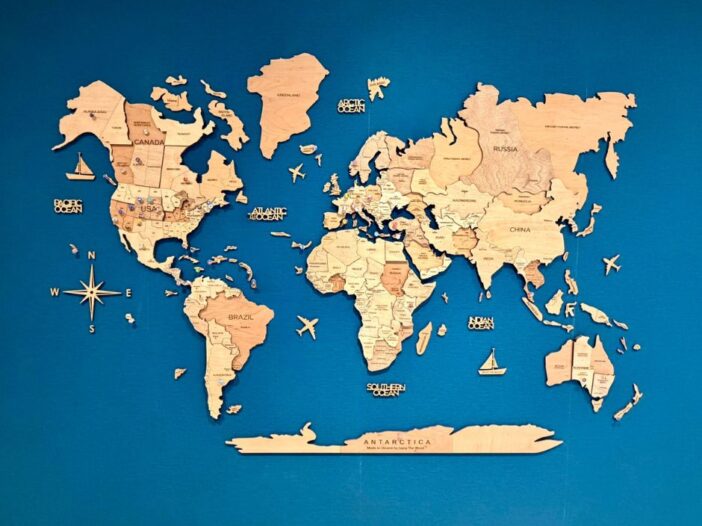
We have a large wooden map on the wall at home, the kind you push a pin into for every place you’ve been. It’s the first thing visitors notice, and it nearly always prompts the same remark: “you haven’t done much in Europe, have you?”
No, we haven’t. We’ve never been the typical fortnight-on-a-beach couple. Our pins tend to go further afield: Antarctica, Alaska, Borneo, Iceland, across the United States from coast to coast, and Hawaii, which is our happy place and the pin we plan returning to. We can do Europe and the UK when we don’t fancy the long haul. But when we choose a big trip, we choose the one that’s right for us, not the one everybody else is booking.
That, as it happens, is where this whole piece begins. Because the most useful idea I share with people thinking about when to retire starts with a wall map and a fortnight away.
The saying that should give us all pause
There’s a well-worn line in my world: Most people spend longer planning a two-week holiday than they ever spend planning their retirement.
It earns a knowing laugh in a room. But it’s worth sitting with, because it isn’t really a comment about laziness. It’s a comment about deadlines.
A holiday gets planned because it has to be. The date is fixed. The balance falls due eight to twelve weeks out, and a reminder lands whether you’re ready or not. Retirement has neither of those things. The date is soft and endlessly moveable, and no envelope ever arrives telling you the balance is due. So the very thing that forces us to prepare for the small event is completely absent from the far larger one.
It isn’t a character flaw. It’s a missing deadline.
We are all expert planners already
Here’s the encouraging part. You already know how to do this. Think about booking a trip you’ve always fancied. Without really trying, you work through a surprisingly sophisticated set of decisions:
- When are you going, this year or further out?
- What can you afford, and is the money actually there?
- What style of trip is it, all-inclusive and easy, or self-catering and free?
- What pace, busy and adventurous, or slow and restful?
- Who’s coming with you?
- How will you book it, yourself, or with someone who does this for a living?
You answer every one of those without breaking a sweat. Now read them again, and notice that they’re exactly the questions that decide a good retirement. When can you stop? Can you afford the life you want? How much certainty do you need, and how much freedom? What sort of days are you buying? Who are you sharing them with? And will you work it all out alone, or with a guide?
The questions are identical. We simply never sit down and ask them, because nothing forces us to.
The reminder nobody sends
If the missing deadline is the problem, the answer is to notice the reminders that do arrive, and to stop putting them in a drawer.
Because they do arrive, in their own quiet way. The annual pension statement that goes unopened. The round-number birthday. A colleague’s leaving do. A friend who retires, or a health scare that arrives without warning. Each of these is a balance reminder of sorts, a nudge that the trip is closer than you think. Most of us bin them and carry on. The people who retire well are simply the ones who treat one of those nudges as the moment to sit down and look properly, while there’s still time to shape the outcome.
The trip itself has a shape
A holiday isn’t one undifferentiated lump of time, and neither is retirement. Both have an arc, and recognising it changes everything.
The first stretch is the honeymoon. The list of long-deferred jobs finally gets done, the big trip gets booked, the garden gets the attention it’s been waiting years for. Then, as on any longer journey, you settle into a rhythm and a shape to your week. This is also where reality gently parts company with the brochure. Nobody’s holiday is the glossy infinity-pool photograph the whole way through, and nobody’s retirement is either. There are flat afternoons and rainy days. Knowing that in advance isn’t pessimism. It’s what stops the first dull week from feeling like a failure.
The right trip also changes with the season of your life. When our daughters were small, skiing at Christmas and camping in the summer were the holidays that fitted, mostly because of cost and school dates. Now that they’re grown and independent, we take the bigger trips, and we take them deliberately while we’re young and fit enough to enjoy them. Retirement works the same way. The early, active years aren’t the same as the slower ones that follow, and a plan that pretends every year will look identical isn’t much of a plan.
And things change once you arrive. The weather turns, a road closes, you discover something better than you booked. On a good trip you don’t abandon the holiday, you reroute. A sensible plan does the same. It isn’t a one-time booking you make and forget. It’s something you revisit when circumstances shift, because on a journey this long, they always do.
Usually three to five years in, the pace eases and the quieter questions surface. What’s my purpose now? What do I want this time to have been about? What do I want to pass on, and to whom? A holiday ends with a flight home and a phone full of photographs. This trip doesn’t end the same way, and there’s no use pretending otherwise. But the thing that makes any holiday precious is precisely that it’s finite. Knowing the clock is running is what makes us choose well and savour what we chose. The stakes here are simply larger, and so are the rewards.
Do it yourself, or take a guide who has made the trip before
That leaves the one holiday question I’ve saved until last, because it’s the one that matters most.
Plenty of people book a trip themselves and have a wonderful time. We always have. Hazel does the detailed research, we decide together where we’re going, and we’ve never gone anywhere one of us didn’t want to go. But for the more complex journeys, the wildlife trips and the long American road trips, we bring in specialists who know the ground, and then we add our own touches on top, because being moved on every single night just to tick another place off the list is no way to actually see a country. We also like knowing that if something goes wrong, someone has our back.
When Hazel became an independent travel agent it opened our eyes properly. She sees how much is available that travellers never find on their own, and how much trouble people get into booking blind, missing the deals they didn’t know existed and the pitfalls they couldn’t have seen coming. It’s the classic case of not knowing what you don’t know.
A thirty-year journey is about as far from home as it gets. You can absolutely plan it yourself. But this is the trip where a guide who has walked the route many times tends to earn their keep, not by taking the decisions out of your hands, but by making sure the ones you take are the right ones, by showing you the options you’d never have found alone, and by being the person you call when the unexpected happens. You keep the wheel. You simply stop driving blind.
So, do it now
We plan our own trips a long way ahead. We already know our core journeys for the next three years, and some are booked. That’s not because we’re unusually organised. It’s because the things that matter most are worth the deadline we set ourselves, rather than the one nobody else will ever send.
Part of getting here was a deliberate choice. In 2021 Hazel stepped away from a demanding job in a secondary school, partly for the sheer relief, but mostly so that we were no longer told when we were allowed to go and what we had to pay for the privilege. Since then we’ve had the freedom to live on our own terms, to work from almost anywhere with a signal, and to fill in a few more pins on that map.
A holiday is short-lived but memorable. Retirement, planned well, is something larger: a long stretch of freedom, choices, and living the way you actually want to. The only real difference is that nobody’s going to send you the reminder.
So consider this yours. My view has never changed: if there is somewhere you genuinely want to go, and you can, then do it now. Do not put it off.

